The engagement of MITIA, and all the people who have been a part of it since 1997, has enabled participation in the following domains:
- Education: provision of school education for a number of poor children. This involves: support for all school registration fees (essential for schooling); payment of monthly expenses for the salaries of the salaries of secular teachers; purchase of school uniforms; purchase of school materials (notebooks and a pen).
- Provision of books (dictionaries and books in French);
- Carry out projects to improve living conditions and educational facilities for children;
- Food: provide breakfast for all orphans, those abandoned or those who come from very poor families unable to provide any nourishment. (For them it is the only meal of the day).
- Provide some emergency food supplies following cyclones or drought;
- Health: provide medical care for children attending the schools supported by the Association.
Results from our work in education projects
School is one of the fundamental tools to escape poverty. In the towns the importance of schools is recognised, and there are a number of them; however, numerous street children and marginalised families are often excluded from education. In the rural areas, only about 20-30% of children go to school. There are several reasons for this:
- School is not seen as a necessity for undertaking traditional tasks (work in the fields, herding, looking after younger siblings, helping with household tasks and fishing);
- Parents do not want to pay, or are not able to pay, school fees (1-2 €/month), which go towards paying the secular teachers’ salaries (45-60 €/month).
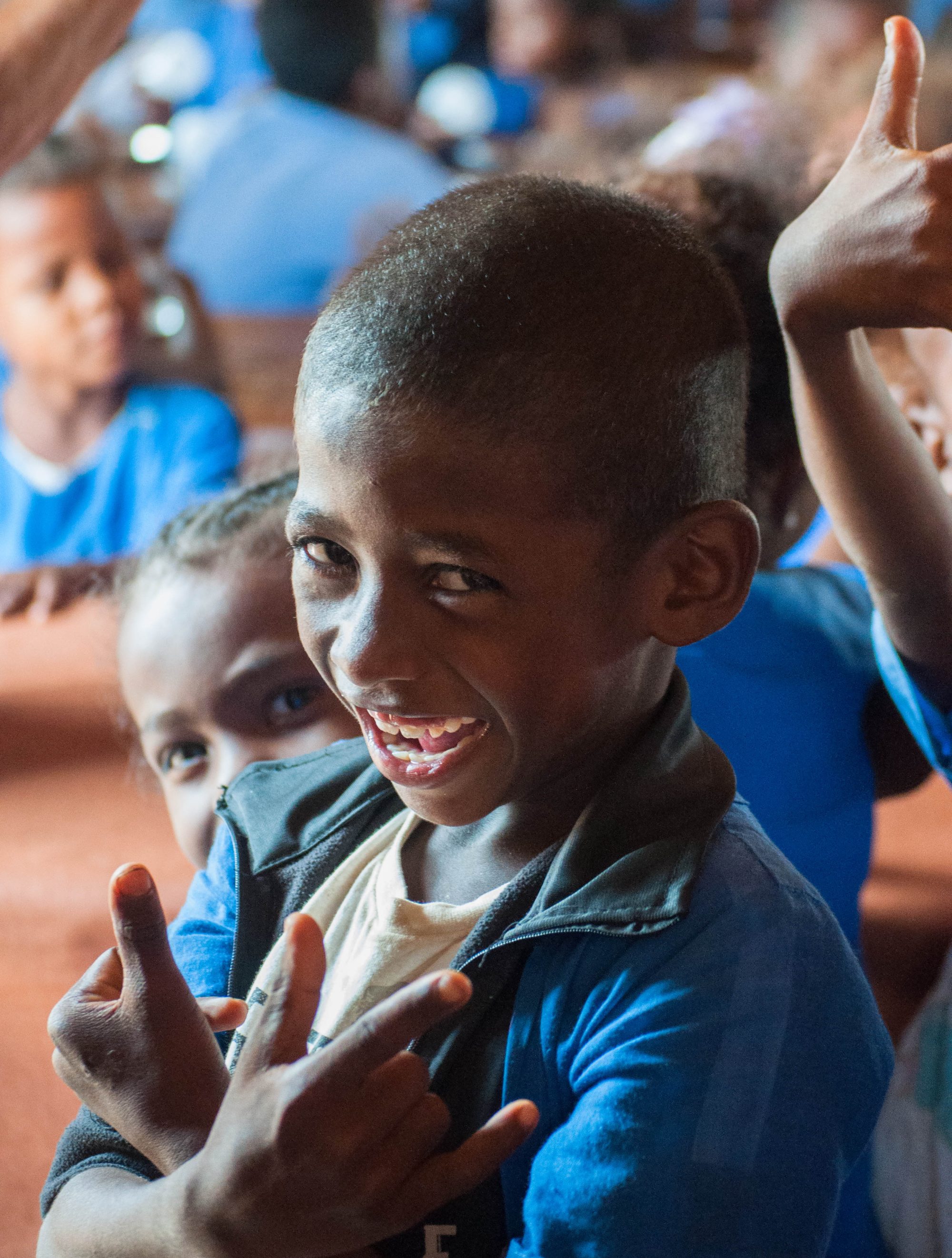
Through our work, we have been able to see the importance of school and its positive influence on improving young peoples’ lives. Those attending school often feel more secure, more dignified, more open. They are cleaner and better educated and very recognisable when they wear school uniform even when they live in the same conditions as the other village children.
Among the many children we have supported to go to school, many tens have have completed primary school, anda secondary school diploma, and five attend university. A remarkable result considering their backgrounds.

 MITIA ODV